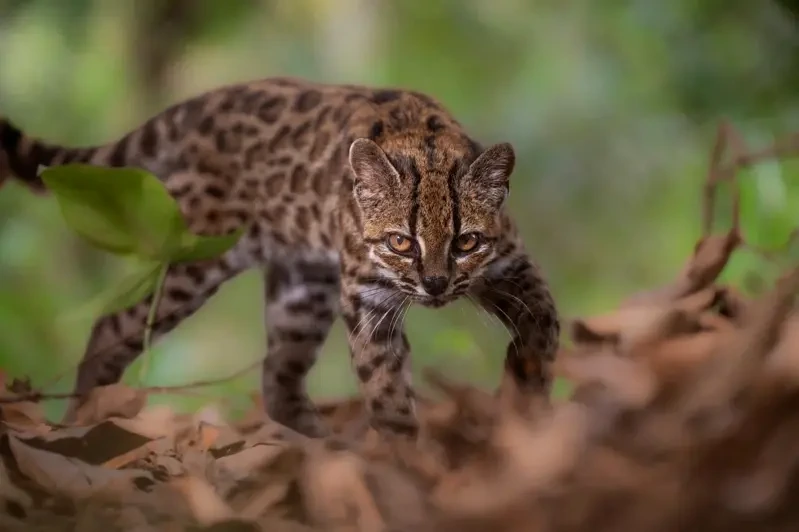
Scientists publishing in the journal Current Biology have announced the discovery of a brand-new species of “tiger cat” in Bolivia—marking the first time in over a century that a new, extant feline species has been confirmed.
Scientifically named Leopardus tilcayo (and known locally as the “Tilcayo cat”), this small wild feline inhabits the cloud forests of Bolivia’s Yungas region. Weighing no more than 1.4 kilograms (3 pounds) and measuring approximately 46 centimeters (18 inches) in length, it is smaller than the average domestic cat.
The discovery came about quite by chance: a spotted “kitten” had been kept as a pet by a local family for a year before the realization that it was a wild animal led to its transfer to the Senda Verde wildlife sanctuary. In an interview, study co-author and National Geographic Explorer Paola Nogales Ascarrunz recalled, “When I first saw it, it was incredibly small; I could hardly believe it was that tiny.”
Compared to other tiger cats, the Tilcayo cat features a slightly compressed face, small rounded ears, and long whiskers, with a light brown coat patterned by irregular rosettes. These physical characteristics did not match the data for any previously known tiger cat species.
Historically, these elusive tiger cats were thought to constitute a single, broad species and were frequently mistaken for similar felines such as oncillas or margays. Such “cryptic species” are notoriously difficult to distinguish based on appearance alone; however, advancements in genetic testing allowed the research team to directly compare DNA profiles, moving beyond a reliance on physical traits for classification.
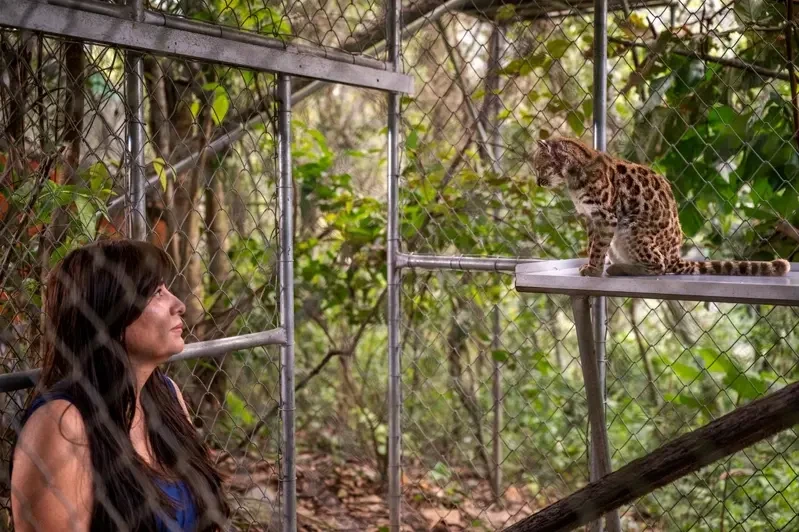
The research team analyzed 38 DNA samples—including eight from museum specimens—collected from various countries across South America. The results revealed that the cat housed in the sanctuary—along with other museum specimens—belongs to an entirely new species; the study also identified a new subspecies within the oncilla family. Genetic data indicate that the Tilcayo oncilla diverged from the common ancestor of oncillas and began evolving independently approximately 1.4 million years ago.
Habitat Loss: A Conservation Challenge
Currently, little is known about the species’ distribution or behavioral habits. Aside from inferences based on fecal samples suggesting a diet of small rodents, the 10-year-old male in the sanctuary is the only known individual in captivity; most other data come from a handful of images captured by infrared cameras in the wild.
As oncillas are increasingly classified into distinct, range-restricted species, the International Union for Conservation of Nature (IUCN) has listed some of them as vulnerable. Nogales-Ascarrunz warns that the cloud forest ecosystem inhabited by this species faces severe threats from deforestation and uncontrolled wildfires.
Fortunately, this new discovery has garnered widespread attention both internationally and within Bolivia. Nogales-Ascarrunz expresses optimism that public interest is shifting from large, “majestic” predators toward these small, elusive felines. “We are always anticipating grand new discoveries, yet sometimes these wonders are right beside us. The emergence of the Tilcayo oncilla gives us even more reason to protect this beautiful world.”